3m tickets sold for Summer events as industry leaders set to gather for Dublin conference
Published on 14th July 2026
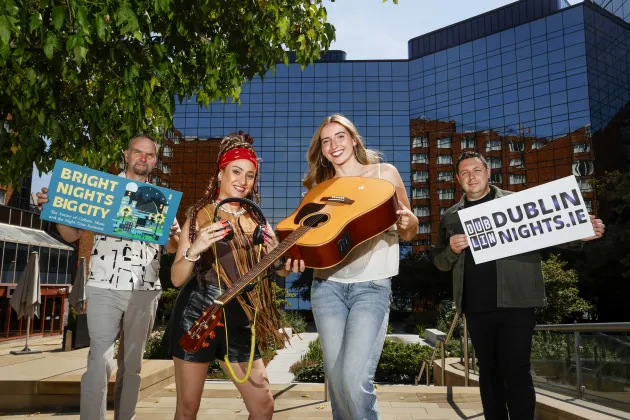
Dublin City Council is delighted to announce ‘Bright Nights, Big City - Culture, Music and the Future of the Night-Time Economy.’
This new one-day conference, which is being organised by AIM Ireland in partnership with the Council's Night-Time Economy Office, will take place on 22 September at the National Concert Hall.
It brings together Irish and international leaders from culture, music, hospitality, tourism, government and city development to explore how cities can build vibrant, safe and sustainable night-time economies.
The Lord Mayor of Dublin Daryl Barron said: "Dublin's evening and night-time economy is one of the city's greatest strengths. It supports jobs, culture, tourism and community life, while helping to make Dublin a vibrant, welcoming and inclusive capital. I'm delighted to see Dublin City Council partnering with AIM Ireland on Bright Nights, Big City. Bringing together Irish and international experts to share ideas and experiences is an important opportunity to help shape the future of our city after dark and ensure Dublin continues to develop as a safe, creative and world-class destination."
The announcement comes at a time when Ireland is enjoying another remarkable summer of music, culture and major events. With well over three million tickets sold across concerts, festivals and live entertainment in 2025—and more expected in 2026—Ireland has cemented its reputation as one of Europe's leading destinations for live music and events.
But while sold-out concerts and festivals continue to make headlines, the conversation around Ireland's night-time economy is becoming much broader.
The way people use our cities is changing. Consumer habits continue to evolve and hospitality has changed significantly in the years since Covid. Younger generations are increasingly seeking experience-led activities, while alcohol- centred socialising continues to decline. At the same time, cities across Europe and beyond are recognising that vibrant evening and night-time economies are essential to culture, tourism, hospitality, public safety, economic development and quality of life. Cities are increasingly competing on what they offer beyond the traditional working day, making the evening and night-time economy an important part of attracting residents, visitors and investment.
The night-time economy is about much more than pubs and clubs. It includes live music, theatres, galleries, restaurants, cafés, festivals, transport, hospitality and the public spaces that help create vibrant, welcoming and safe cities beyond the traditional working day.
More than 100 cities around the world have now appointed Night Mayors or Night-Time Advisors, recognising the importance of collaboration between government, culture, hospitality and local communities in shaping successful cities after hours. In Ireland, that work is being supported by the Department of Culture, Communications and Sport through the national Night-Time Economy Advisor pilot programme and continued investment in grassroots music and culture. Together, these initiatives recognise that a thriving night-time economy depends on both strategic leadership and a strong pipeline of creative talent.
This September, that global conversation comes to Dublin.
Ray O'Donoghue, Dublin City Council's Night-Time Economy Advisor, said: "Ireland has become a global success story for live music and culture. The challenge now is ensuring our cities evolve at the same pace. Great night-time economies don't happen by accident. They are built through partnerships between government, culture, hospitality, transport and local communities. Around the world we're seeing cities invest in vibrant, welcoming and safe places beyond the traditional working day because they recognise the value they bring to communities, visitors and local economies. Bright Nights, Big City is about bringing those conversations to Ireland and learning from some of the people leading that change internationally."
This conference will explore how cities are responding to changing consumer behaviour, supporting grassroots culture and music, improving transport and public safety, and creating thriving destinations for residents and visitors alike. International case studies will sit alongside Irish perspectives, with a focus on collaboration, innovation and practical solutions.
Colm Hanley, Managing Director, AIM Ireland, said: "Every headline act starts somewhere. Today's grassroots venue is where we'll discover the next CMAT, Fontaines D.C. or Kneecap. Ireland's biggest concerts and festivals are a tremendous success story, but they're built on a foundation of independent artists, grassroots venues and local promoters. Supporting that ecosystem is essential—not only for the future of Irish music, but for creating vibrant cities and a thriving night-time economy. We're looking forward to welcoming speakers from Ireland and around the world to share ideas, challenge thinking and help shape what comes next."
Further speakers and programme details will be announced in the coming weeks.
ENDS