Temple Bar Square Area Improvement Scheme
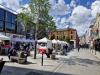
Temple Bar is home to some 2,000 residents and attracts up to 22 million pedestrians every year. This project covered approximately 2,400 square metres and took in Crown Alley, Temple Bar Square, Temple Bar Street and parts of Fownes Street Lower and Cope Street.
Dublin City Council has reimagined Temple Bar Square and its surrounding streets to create a safer, more accessible and inclusive public space in one of the most iconic and visited areas of the city. The project enhanced the quality, heritage and liveability of Dublin’s Cultural Quarter for residents, visitors and businesses alike.
Once a surface car park, Temple Bar Square was transformed into a dynamic urban space in the 1990s. Today, the area is home to around 2,000 residents and sees up to 22 million visitors each year with 60,000 pedestrians passing through each day.
The Temple Bar Square Area Improvement Scheme built on this legacy, elevating the public experience, improving accessibility and reinforcing Temple Bar’s identity as both a cultural destination and a functioning neighbourhood.
Construction of this scheme began in April 2023 and was completed in April 2025.
Public Realm Upgrades
Key public realm enhancements include:
- The new square has been reconstructed as a single surface paved in granite. By removing the steps and kerbing, the footprint of the square has almost doubled.
- Four new trees have been planted.
- Comfortable public seating is now on three sides of the square. A mix of sunny and shaded seating was provided.
- A new lighting system has greatly improved the quality of lighting on the square.
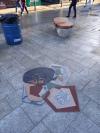
- A public art piece “Cityscape with Sleeping Dog” by Isabel Nolan was installed at the north eastern corner of the square in recognition of Temple Bar’s status as Dublin’s Cultural Quarter.
- The traditional cobbled carriageways were restored on Crown Alley and Temple Bar Street.
- Granite footpaths were provided throughout the project area.
- Widened footpaths and the removal of steps have improved accessibility through the area.
- The project was also extended to take in Fownes Street Lower, the northern section of Fownes Street Upper and part of Cecilia Street, where the traditional Temple Bar cobbles and Leinster Granite footpaths were reconstructed and improved.